Getting a piercing is a rite of passage for many teenagers in Central Florida. Whether it's a simple earlobe stud or a cartilage piercing, it's often one of the first ways young people express their individuality. But before you or your teen rush to the nearest studio, you need to understand the legal requirements.
In Florida, the laws regarding body modifications are strict. Knowing them protects you from legal trouble and ensures you’re choosing a safe, reputable establishment. At Golden Tarot Ink Club, we believe an informed client is a happy client. We’re here to break down exactly what you need to know before walking into a piercing shop in Orlando, FL.
What does Florida law say about piercing minors?
The general rule in the Sunshine State is straightforward: A minor (someone under the age of 18) cannot get a piercing without the written, notarized consent of a parent or legal guardian.
According to Florida Statute 381.0075, a person may not perform a body piercing on a minor unless they have the notarized consent of the minor’s parent or legal guardian. This law exists to protect minors from making permanent or semi-permanent changes to their bodies without adult supervision and to ensure they aren't exposed to health risks in unregulated environments.
Why does this matter? It’s not just about bureaucratic red tape. This law ensures that a responsible adult is aware of the procedure and the necessary aftercare, which significantly reduces the risk of infection or complications down the road.
What are the specific requirements for minors?
If you’re a parent bringing your child in for a piercing, you can’t just drop them off at the mall. The law requires active parental involvement. Here is the checklist you need to follow:
- Physical Presence: In many reputable shops, the parent or guardian must be present during the procedure.
- Notarized Consent: You must complete a specific form that is notarized. Some shops have a notary on-site, but you should call ahead to confirm.
- Identification: Both the minor and the parent must provide valid identification.
What ID do I need to bring?
Don't get turned away at the counter because you forgot your wallet. Strict ID verification is how a legitimate piercing shop in Orlando, FL proves they are following the law.
You’ll generally need to provide:
- For the Parent/Guardian: A valid government-issued photo ID (Driver’s License, Passport, or State ID).
- For the Minor: A government-issued photo ID (Learner’s Permit, Driver’s License, or Passport) or a Birth Certificate along with a School ID.
If the adult accompanying the minor is a legal guardian but not the parent listed on the birth certificate, you must bring official court documentation proving guardianship.
Are there exceptions or special cases?
You might be wondering if ear piercings fall under the same strict rules as other body parts. Interestingly, Florida law makes a distinction here.
According to the statutes, the definition of "body piercing" often excludes the ear lobe. This means that while many professional studios still require parental presence and consent for earlobes out of an abundance of caution and company policy, the strict notarization requirements mandated by the state typically apply to piercings other than the ear.
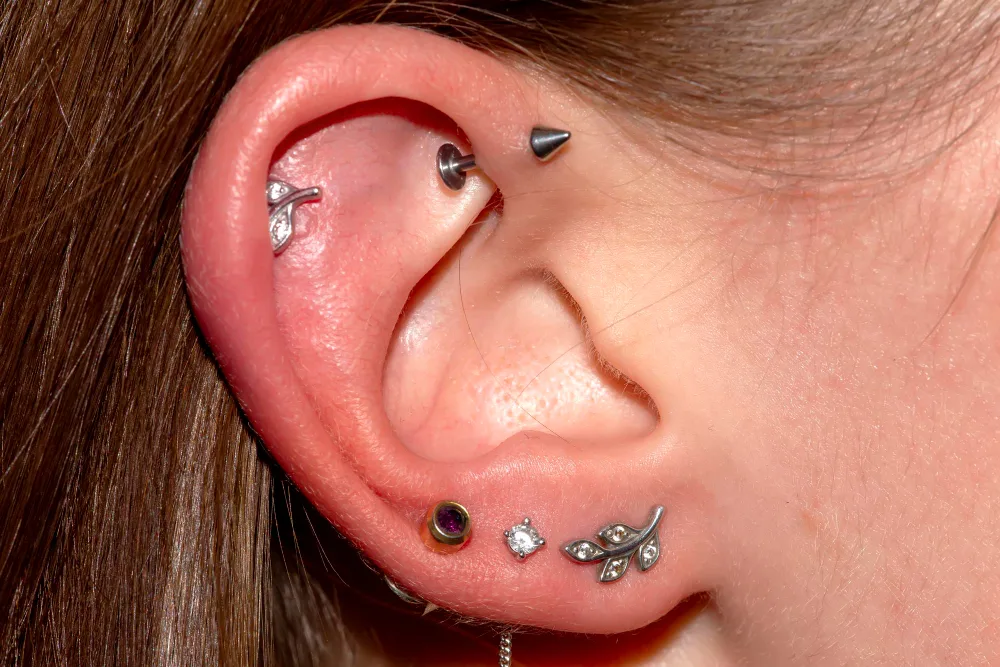
However, cartilage piercings (like the helix or tragus) are legally considered body piercings and fall under the stricter consent laws.
Do local ordinances change the rules?
While state law sets the baseline, local municipalities can enforce stricter rules. For example, Orange County or the City of Orlando may have specific zoning or health department regulations that a shop must follow.
This is why you might find that one piercing shop in Orlando, FL refuses to pierce a 14-year-old’s navel, while another might agree to it with parental consent. Reputable shops like ours often have age policies that go above the legal minimums for certain difficult-to-heal piercings to ensure the safety of the client.
How does the parental consent form work?
The consent form is a legal document where you acknowledge the risks involved and grant permission for the procedure.
This form usually asks for:
- Descriptions of the jewelry being used.
- Confirmation of the specific site on the body being pierced.
- Acknowledgment of aftercare instructions.
Why is verification so strict?
Shops are required to keep these records for a specific period. If an inspector from the Florida Department of Health walks in, the shop must be able to produce these forms to prove they aren't piercing minors illegally. It protects the shop’s license and assures you that they operate above board.
What are the risks of "underground" or underage piercings?
We know it can be tempting for teens to try and bypass these rules, perhaps by visiting an unlicensed piercer operating out of a house or using a DIY kit. This is incredibly dangerous.
Unlicensed environments rarely adhere to the strict sterilization standards required by Florida law. Risks include:
- Severe Infection: Without hospital-grade sterilization (autoclaves), bacteria can easily enter the wound.
- Bloodborne Pathogens: Improper needle handling can transmit Hepatitis B, Hepatitis C, and HIV.
- Nerve Damage: Someone without training may pierce through nerves or blood vessels, causing lasting damage.
Shops that violate the law by piercing minors without consent face severe penalties, including hefty fines (often starting around $500 per violation) and the revocation of their operating license. If a shop is willing to break the law to take your money, they’re likely cutting corners on safety, too.
How do I choose a reputable piercing shop in Orlando, FL?
When it comes to modifying your body, you never want to look for the "cheapest" option. You want the safest.
Here is what to look for when scouting a location in Central Florida:
- Check for Licenses: The shop should proudly display their permit from the Florida Department of Health.
- Ask About Sterilization: Ask to see their autoclave or ask about their use of single-use, disposable needles. A professional will be happy to show you.
- Look at Portfolios: Experienced piercers will have photos of healed work, not just fresh piercings.
At Golden Tarot Ink Club, we treat every piercing with the same level of artistic care and safety protocols as our tattoos. We aren't just a business; we’re your neighbors here in Orlando. We prioritize your health over a quick sale, ensuring that every procedure is done legally and safely.
Safety First, Style Second
Understanding the laws regarding the legal age for piercings in Florida helps you make the best decisions for yourself and your family. It’s about more than just following rules—it’s about ensuring that a fun expression of style doesn't turn into a medical nightmare.
Remember, for body piercings (excluding the earlobe), anyone under 18 needs a parent present and a notarized consent form. There are no shortcuts worth your health.
If you’re ready for a new look and want to ensure it’s done right, come see us. We’ll walk you through the paperwork, help you pick out high-quality jewelry, and provide a clean, professional environment.
Ready to sparkle? Visit Golden Tarot Ink Club, the premier piercing shop in Orlando, FL, to book your appointment today.